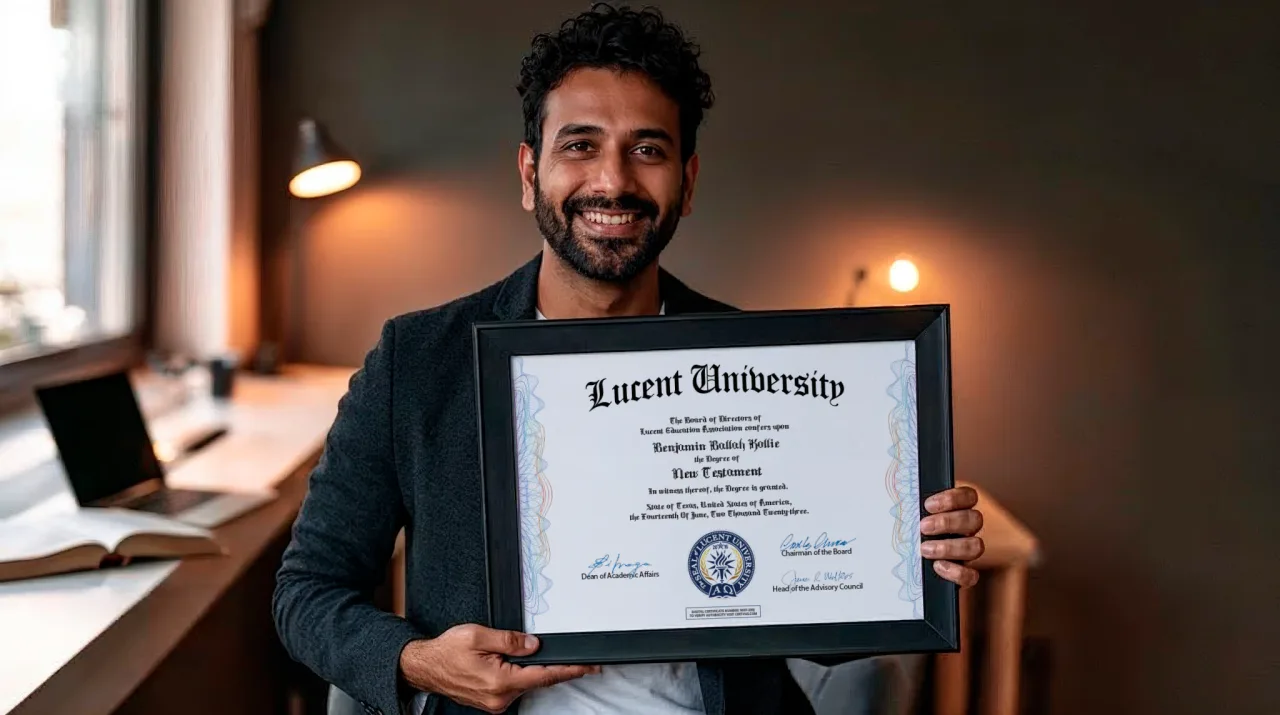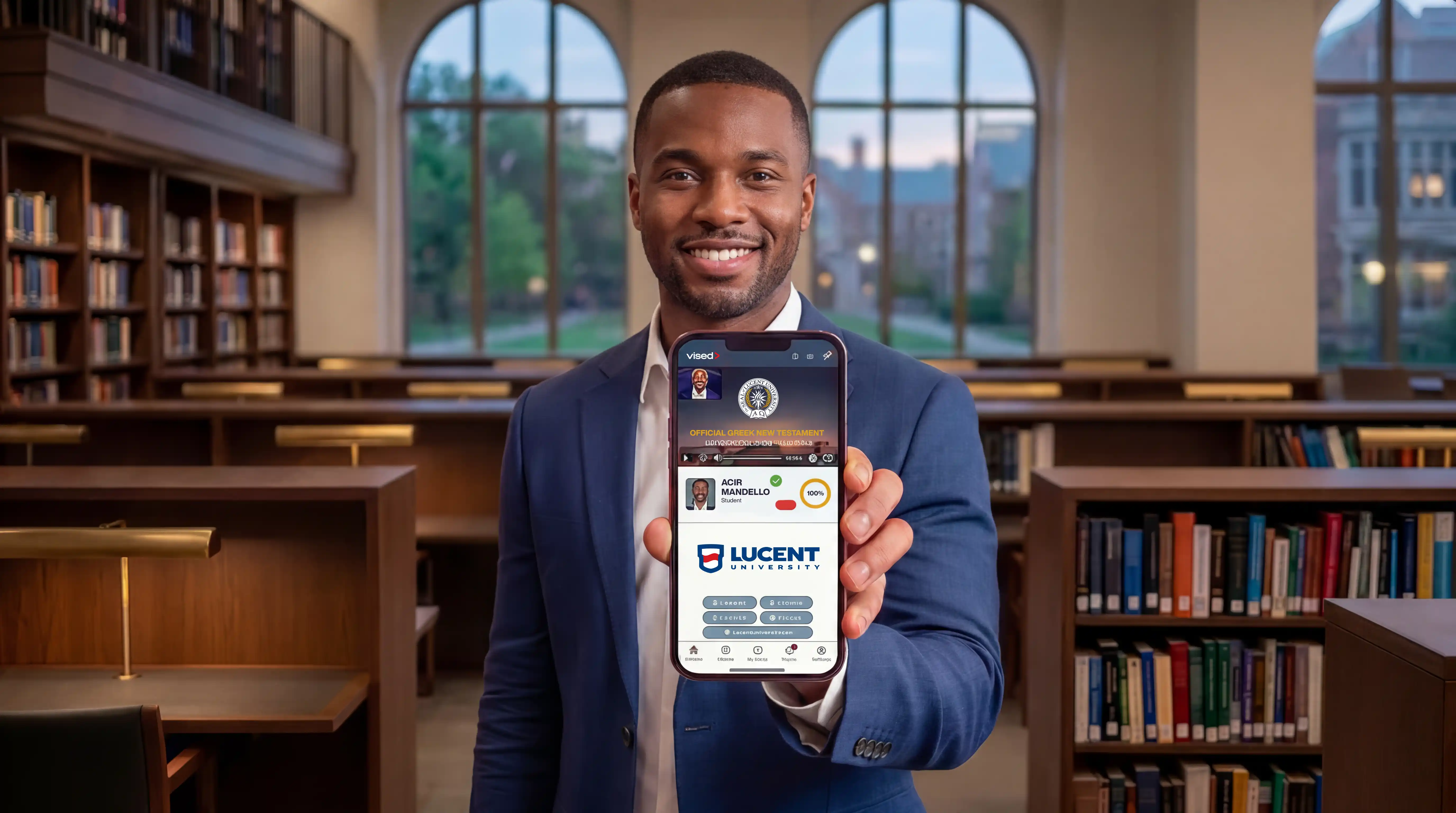







Successful theology student Majyambere Onesphore achieving comprehensive ministry training online
Successful theology student Eton Ekanem achieving comprehensive ministry training online
Successful theology student Oluwatcheoun Koba achieving comprehensive ministry training online
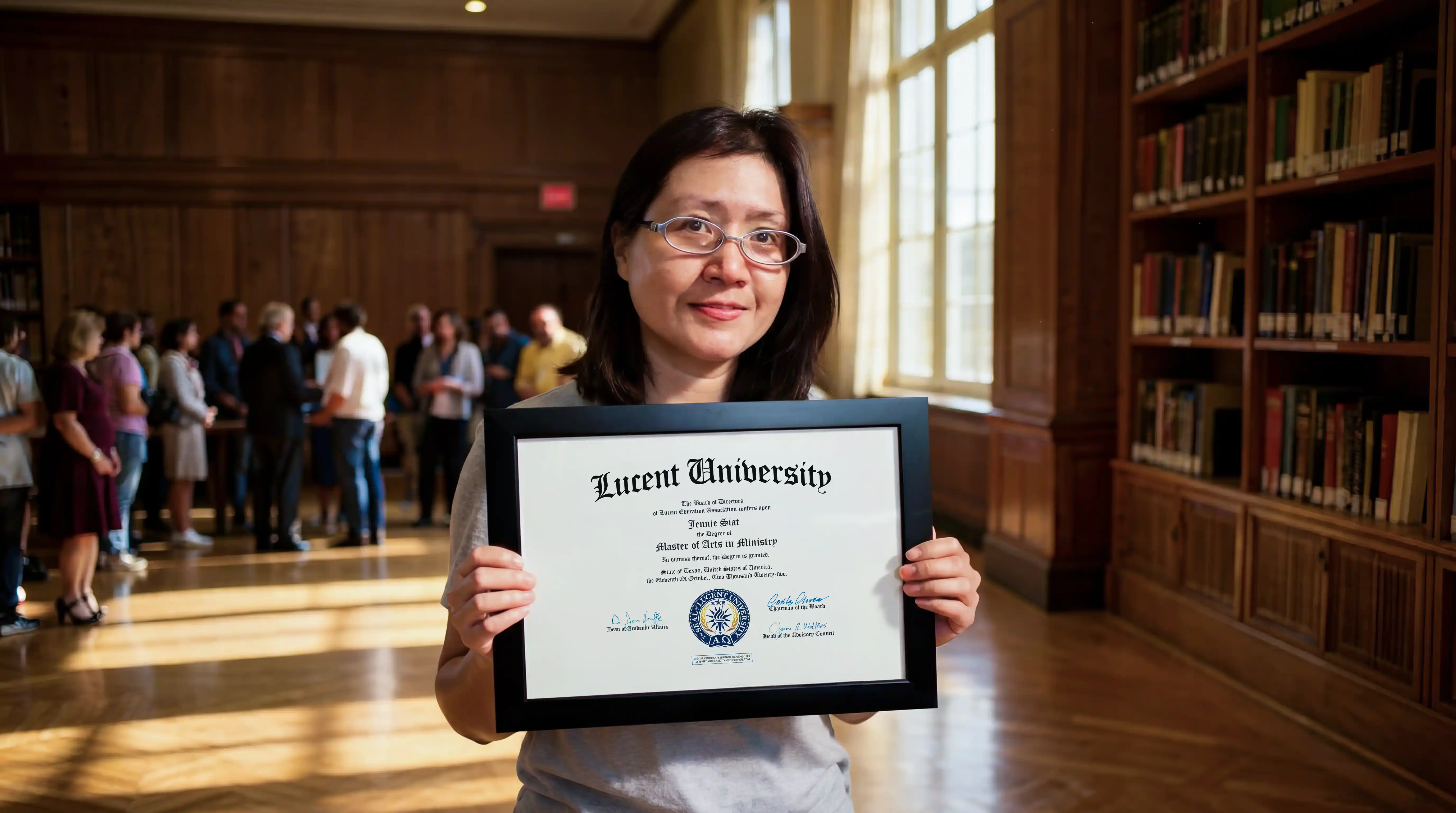
Successful theology student Jennie Siat achieving comprehensive ministry training online
Successful theology student Lazarus Phiri achieving comprehensive ministry training online
Successful theology student Ayuk Peter achieving comprehensive ministry training online
Successful theology student Elienai Littig achieving comprehensive ministry training online
Successful theology student Sigit Syahranie achieving comprehensive ministry training online
Successful theology student Fernanda achieving comprehensive ministry training online
Successful theology student Rachel achieving comprehensive ministry training online
ASIC Accredited

Affordable Theology & Ministry Degrees Online

7-Day Trial

We offer a free 7-day trial with no obligations. Experience firsthand the value of enrolling.

Start Free Trial

Programs

Explore our comprehensive ministry programs designed to equip you for effective service.

View Programs

Our Mission

We are committed to providing affordable, high-quality theological education worldwide.

Learn More
Texas Education Agency certification verifying our US-based online ministry degrees

TEA Authorized

Lucent University is Authorized by the Texas Education Agency under exception. We adhere to the educational and regulatory compliance within the United States.

ASIC Premier Accreditation representing academic excellence in theology degrees online

ASIC Accredited

Accredited by ASIC with Premier Status. ASIC is one of the world's leading accreditation agencies for international educational institutions.

Voices from Our Community

What Our Students Say

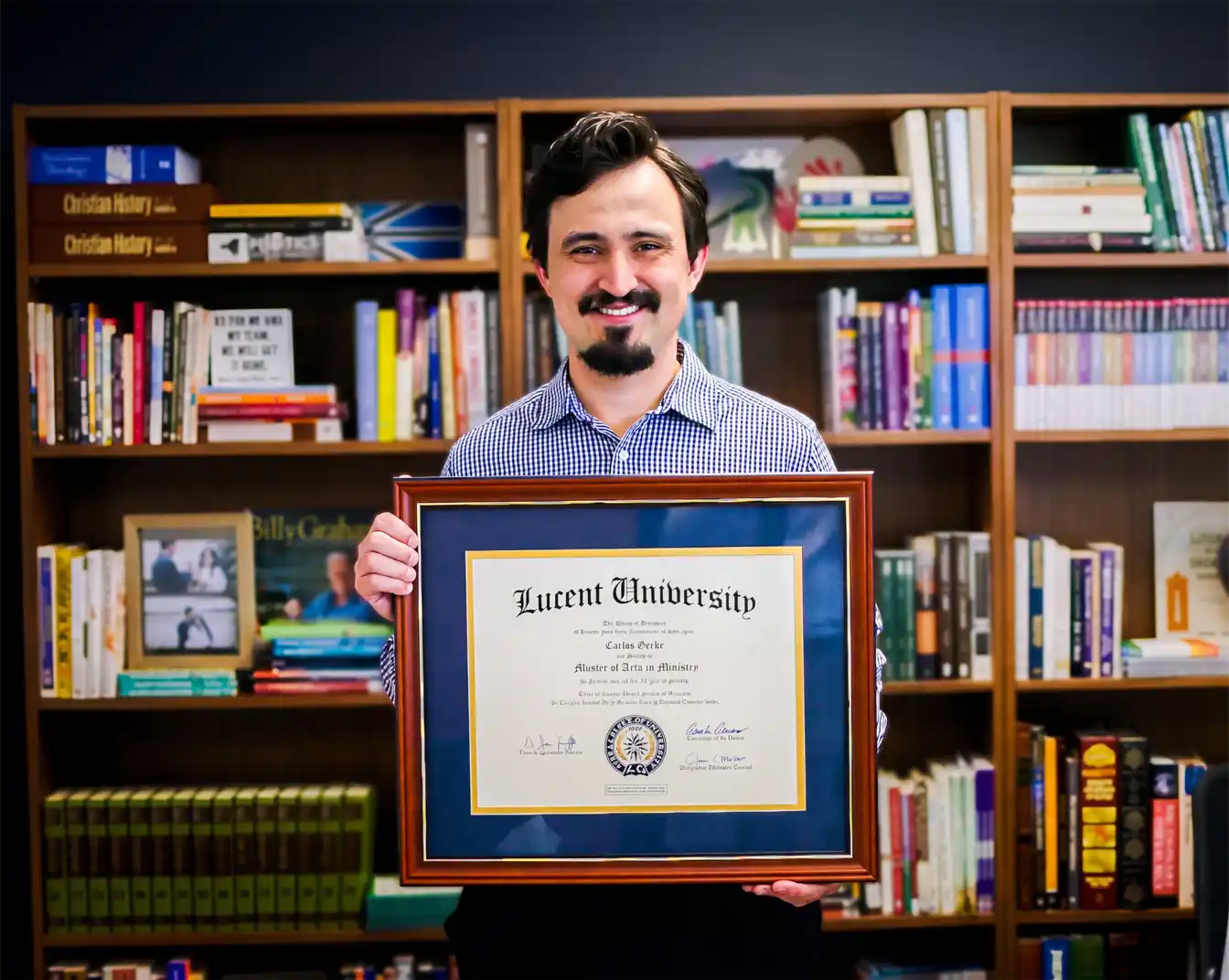
Carlos Gerke holding certificate
(Image Placeholder)
Successful online theology graduate Carlos Gerke holding his ministry degree
Success Story

Meet Carlos Gerke

Lucent student accepted in two doctoral programs in the US

Carlos Gerke's journey is a powerful testament to the academic excellence provided by Lucent University. Originally a dentist, Carlos decided to answer his calling and pursued his Master of Divinity with us.

A common question students have is whether a degree from Lucent will be recognized by other institutions. Carlos's story answers that perfectly. After completing his Master of Divinity at Lucent, he applied and was accepted into two rigorous doctoral programs at two of the largest and most prestigious seminaries in the United States.

Today, having left his profession as a dentist, Carlos serves as an Executive Pastor at a large church in Texas, using his robust theological foundation to lead and inspire his community. His success proves that a degree from Lucent University opens doors to the highest levels of academic and ministerial achievement.
Academic Programs

Ministry Programs

Our degrees are practical in nature and will prepare you with all the skills you need to effectively minister in your church, community, or the mission field.
Online student engaging in the Certificate of Theology program at Lucent University
Associate Courses

Certificate Course

The Certificate Course in Biblical Studies called Certificate in Theology is an affordable non-degree program designed to give you a deeper understanding of the Bible. If you are looking to become a disciple maker and better serve God in your church, community, or in the mission field, this is the right program for you.

Starts at US$ 40.00 36 Months
Learn More
Passionate student learning online with the Associate in Theology degree
Associate Degree

Associate in Theology

The Associate of Theology Degree Online is a Bible-based degree developed to equip men and women who want to enter the ministry. If you are looking for an affordable degree that will train you to become a disciple maker and better serve God, this is the right program for you.

Starts at US$ 40.00 18 Months
Learn More
Dedicated online student progressing through the Bachelor in Theology and Ministry program
Bachelor of Arts Level

Bachelor in Theology

The Bachelor of Theology and Ministry Degree Online was developed to fully equip you for a powerful and meaningful ministry. Looking for an affordable degree with the best online experience and best professors? Our Bachelor of Theology is the right choice for you.

Starts at US$ 30.00 48 months
Learn More
Advanced student exploring biblical studies for the Master in Divinity degree online
Master

Master in Divinity

The Master's of Divinity (MDiv) Degree Online was developed to fully equip you to have a powerful and meaningful ministry. If you are looking for a program that is affordable and provides you with the best professors, our MDiv is the choice for you.

Starts at US$ 29.00 6 Months
Learn More
Ministry student accessing the Hebrew Old Testament course platform
Extension Course

Hebrew Old Testament

Study the Hebrew Bible in a fraction of the time of conventional courses. With little or no background in the language, you will obtain practical abilities to perform exegesis of the Old Testament using online tools. Enroll today to learn Hebrew and apply it to your studies.

Starts at US$ 29.00 6 Months
Learn More
Billy Graham School of Evangelism training program online at Lucent University
Extension Courses

Billy Graham School of Evangelism

Based on the Billy Graham Evangelistic Association’s decades of experience. At the conclusion of your studies, you’ll have the tools you need to be an evangelist and effectively tell men, women, and children about Christ.

Starts at US$ 29.00 6 Months
Learn More
Engaged students collaborating in our Master in Ministry degree program online
Master

Master in Ministry

The Master of Ministry program is a comprehensive program that equips you with the knowledge and skills to be a successful ministry leader. Designed to help you develop a deep understanding of the Bible and its teachings.

Starts at US$ 29.00 6 Months
Learn More
Online student accessing the Greek New Testament course platform
Certificate Course

Greek New Testament

Study the Greek Bible without spending years on the language. With little or no Koine Greek background, get equipped with the practical abilities to perform exegesis of the New Testament and access the original message communicated by the authors.

Starts at US$ 29.00 6 Months
Learn More

Curriculum & Course Details

Explore the comprehensive curriculum offered by Lucent University. Each course is designed to provide a deep understanding of the subject matter.

FOUNDATION

Biblical Studies

Foundational courses designed to equip students with a deep understanding of the Old and New Testaments.

Biblical Christianity +
Biblical Christianity provides a strong foundation for understanding the Bible accurately and applying it faithfully in ministry. The course introduces students to the cultural, historical, and literary realities that shape the biblical text, helping learners read Scripture with greater clarity, confidence, and humility. Students explore why context matters, how biblical genres communicate, and how to distinguish between the timeless truth of God’s Word and cultural features tied to the original setting. Students learn practical tools for studying Scripture responsibly: how to observe the text carefully, ask the right interpretive questions, trace themes across passages, and make applications that align with biblical meaning. The course highlights common interpretive mistakes and trains students to avoid misusing Scripture—especially when teaching, preaching, counseling, or leading others. Biblical Christianity is intentionally ministry-focused. Students connect sound interpretation to real pastoral and discipleship needs: guiding new believers, strengthening families, addressing moral questions, and forming communities shaped by the gospel. Because Lucent serves students worldwide, the course also addresses cross-cultural application, helping leaders communicate biblical truth in diverse contexts without compromising Scripture’s authority. Throughout, the course points learners to the unity of the Bible and the centrality of Jesus Christ. By developing a disciplined, Christ-centered approach to Scripture, students are equipped to serve the church with teaching that is faithful, practical, and spiritually forming—so that God’s people grow in maturity, mission, and love.
Old Testament Survey +
Old Testament Survey introduces students to the books, storyline, and theology of the Old Testament, equipping them to read and teach Scripture with greater confidence. Students explore the structure of the Old Testament and study each book with attention to background, genre, key themes, and practical application. The course helps learners understand how the Old Testament reveals God’s character, covenant faithfulness, and redemptive purposes, preparing them for deeper preaching, teaching, and discipleship ministry. A major emphasis is learning to read different genres responsibly—narrative, law, poetry, wisdom, and prophecy—because faithful interpretation requires understanding how each type of text communicates. Students learn to trace themes such as creation, sin, covenant, worship, justice, kingship, and hope, and to connect these themes to the gospel and the mission of the church. Lucent’s ministry application focus is woven throughout. Students are trained to teach Old Testament passages in ways that strengthen faith, guide moral and spiritual formation, and help churches understand the unity of Scripture. The course also supports pastoral leadership by equipping students to address common questions about difficult texts, suffering, and God’s justice with biblical clarity and compassion. With a global audience in mind, Old Testament Survey helps students apply Scripture wisely in diverse cultural settings while remaining anchored in God’s Word. Students leave equipped to see Christ-centered continuity across the Bible and to serve the church with teaching that is faithful, practical, and spiritually forming.
New Testament Survey +
New Testament Survey provides a structured introduction to the books, themes, and theological message of the New Testament. Students explore the storyline of the gospel, the growth of the early church, and the central teachings that shape Christian faith and practice. The course helps learners understand each New Testament book in its setting and purpose, building confidence for reading, teaching, and applying Scripture in ministry. Students examine major themes such as the person and work of Jesus Christ, salvation by grace, discipleship, the life of the church, mission, holiness, and Christian hope. The course also introduces tools for understanding context, genre, and the flow of argument in letters and narratives, helping students interpret responsibly rather than relying on isolated verses. Lucent’s ministry application focus is central. Students learn how New Testament teaching shapes preaching, evangelism, counseling, leadership, and daily discipleship. The course equips leaders to communicate the gospel clearly, teach doctrine faithfully, and apply Scripture to real pastoral needs such as suffering, unity, spiritual growth, and ethical living. Because Lucent serves students globally, New Testament Survey is designed to be accessible and practical across cultures. Students learn to distinguish between timeless biblical truth and cultural details, enabling wise application in diverse ministry contexts. The course also encourages a Christ-centered reading of the New Testament, keeping the gospel at the center of learning and service. By the end of the course, students will have a stronger grasp of New Testament content and purpose and will be better equipped to build churches and ministries rooted in Scripture, shaped by the gospel, and committed to mission.
Life of Christ +
Life of Christ provides a focused, ministry-relevant study of Jesus’ life and mission as presented in the Gospels. Students explore the historical and spiritual context of Christ’s coming and trace the key movements of His ministry—His teaching, compassion, miracles, authority, suffering, death, and resurrection. The course helps students see Jesus clearly, not only as a subject of study, but as Lord, Savior, and the model for discipleship and ministry. Students engage the Gospel accounts in an organized way, learning how to understand events and teachings in their setting and how to communicate them faithfully. The course highlights major themes such as the kingdom of God, repentance and faith, the call to discipleship, prayer, holiness, mercy, and mission. Students also reflect on how Jesus formed disciples through relationships, daily life, and practical obedience—insights that directly shape ministry leadership today. Lucent’s ministry application focus is central: students learn to teach the life of Christ in churches, small groups, and discipleship settings, and to apply Christ’s character and priorities to real leadership challenges. The course supports preaching and teaching by strengthening biblical confidence and Christ-centered interpretation. Because Lucent serves students globally, the course also helps learners present the message of Jesus clearly across cultures. By grounding ministry in the person and work of Christ, Life of Christ equips students to lead with love, courage, and humility—helping others follow Jesus faithfully and participate in His mission in the world.
Critical Analysis of the Epistle to the Ephesians +
Critical Analysis of the Epistle to the Ephesians offers a focused, ministry-relevant study of one of the New Testament’s richest letters for church identity, unity, and discipleship. Students examine Ephesians in its historical and literary context and learn how to interpret its message with clarity, depth, and pastoral wisdom. The course combines careful analysis with practical application so students can teach and lead from Ephesians faithfully in real ministry settings. Students explore major themes such as grace and salvation, identity “in Christ,” the unity of Jew and Gentile in the church, the nature of the body of Christ, spiritual gifts and maturity, Christian ethics, and spiritual warfare. Learners practice exegetical skills—tracing argument flow, studying key terms, and recognizing theological structure—so they can handle the text responsibly and avoid shallow or misapplied conclusions. Ministry application remains central throughout. Ephesians speaks directly to challenges pastors and leaders face: division, discouragement, spiritual confusion, family and relational tensions, and the need for resilient faith. Students learn how to translate theological truth into discipleship practices, preaching outlines, teaching sessions, and counseling conversations that strengthen believers. Because Lucent serves students worldwide, the course also supports cross-cultural teaching. Students learn how to proclaim unity and holiness in diverse contexts while remaining anchored in Scripture. By the end, learners are equipped to lead churches that are grounded in grace, strengthened in love, and mobilized for mission as God’s people in the world.
Overview of Wisdom Books in the Old Testament +
Overview of Wisdom Books in the Old Testament introduces students to Job, Proverbs, and Ecclesiastes, equipping them to interpret and apply biblical wisdom for faithful living and ministry. The course explains what makes wisdom literature distinct: these books address universal human questions—work, suffering, relationships, justice, temptation, meaning, and mortality—by calling God’s people to live skillfully under God’s rule. Students explore how biblical wisdom begins with “the fear of the LORD,” understood as reverent trust, worship, loyalty, and obedience. The course contrasts different wisdom approaches: Proverbs often teaches general patterns of life under God’s order, while Job and Ecclesiastes honestly wrestle with complexity, mystery, and suffering—especially when life does not seem to follow expected patterns. Students learn how to read Hebrew poetry and recognize features such as parallelism and figurative language, strengthening interpretation and teaching. Lucent’s ministry application focus is central. Wisdom literature is deeply pastoral: it equips leaders to counsel people through hardship, guide believers in everyday decisions, and speak faithfully about suffering, success, and the pursuit of meaning. Students learn how to teach Proverbs without turning it into promises it does not make, and how to preach Job and Ecclesiastes with hope and humility, pointing to God’s wisdom and sovereignty. Designed for a global audience, the course helps students apply wisdom across cultures while remaining anchored in Scripture. By the end, learners are better prepared to form disciples who live wisely, worship faithfully, and endure suffering with steady hope—serving the church through Scripture-shaped counsel and Christ-centered teaching.
DOCTRINE

Theology & Languages

Deep theological training combined with the practical tools of biblical Greek and Hebrew to interpret Scripture faithfully.

New Testament Theology 1 +
New Testament Theology 1 introduces students to six major areas of Christian doctrine through a New Testament lens, equipping them for thoughtful ministry and clear teaching. The course surveys Theology Proper, Christology, Pneumatology, Angelology, Soteriology, and Ecclesiology, helping learners understand what the New Testament teaches about God, Jesus Christ, the Holy Spirit, spiritual realities, salvation, and the nature and mission of the church. In each theological area, students examine foundational evangelical convictions and the biblical support for those beliefs. The course also engages alternate views, offering relevant evaluation so students can respond wisely to doctrinal confusion, cultural pressure, and common misunderstandings. Rather than treating theology as abstract theory, the course shows how doctrine shapes worship, discipleship, preaching, and pastoral care. Students learn to connect key texts to core teachings and to communicate theology in a clear, accessible way for local churches and ministry settings. This includes learning how to explain the gospel, defend essential truths without harshness, and shepherd people through questions about faith, identity, suffering, and Christian community. Designed for Lucent’s global student body, New Testament Theology 1 supports ministry leaders working across cultures, denominations, and church contexts. By building a coherent doctrinal framework rooted in Scripture, the course prepares students to lead with conviction and humility—serving the church with Christ-centered theology that strengthens faith and advances mission.
New Testament Theology 2 +
New Testament Theology 2 builds theological depth by exploring major New Testament themes with a focus on how doctrine shapes Christian life and ministry. Students engage key theological topics from an evangelical perspective, strengthening their ability to connect careful biblical study to teaching, discipleship, and pastoral leadership. The course addresses foundational questions about God, Scripture, salvation, the church, and Christian hope, helping students develop a coherent framework for ministry in diverse settings. Students explore themes such as the kingdom of God, justification and sanctification, the nature of the church, the Lord’s Supper, discipleship, and the Great Commission. The course also engages important issues that affect real ministry, including marriage and family, spiritual maturity, ethical living, and the credibility and authority of Scripture. Students learn to handle theological topics responsibly—avoiding shallow answers while keeping Christ and the gospel at the center. New Testament Theology 2 is designed to strengthen both conviction and pastoral wisdom. Students practice explaining doctrine clearly, evaluating alternate viewpoints fairly, and applying New Testament teaching to real questions faced by churches today. The course supports ministry leaders who must teach biblically, counsel wisely, and lead with clarity in complex cultural contexts. With a global perspective, the course equips students to serve across cultures with sensitivity while remaining anchored in Scripture. By integrating doctrine, mission, and spiritual formation, New Testament Theology 2 prepares students to lead communities that are grounded in the Word, shaped by the gospel, and equipped to live faithfully for Christ in the world.
Apologetics +
Apologetics equips students to explain and defend the Christian faith with clarity, humility, and love. This course teaches how to respond thoughtfully to questions and objections while remaining faithful to Scripture and centered on Jesus Christ. Students explore the relationship between faith and reason, learning how to present Christianity as true, meaningful, and relevant without treating apologetics as a merely intellectual debate. Key topics include the existence and nature of God, the reliability of Scripture, the identity of Jesus, and the uniqueness of the gospel. Students also address common challenges such as suffering, moral confusion, skepticism, and competing worldviews. The course emphasizes careful thinking, clear communication, and a Christlike posture—speaking the truth with gentleness and respect. Apologetics is designed for ministry application. Students practice building clear explanations for seekers, discipling believers who face doubts, and preparing teaching that strengthens faith in local churches. They learn to identify underlying assumptions in modern culture and to respond in ways that remove unnecessary obstacles to the gospel. Because Lucent serves a global audience, the course encourages cultural awareness and respectful engagement with people from diverse backgrounds. Students are equipped to listen well, avoid misrepresenting others, and communicate Christian conviction with integrity. By grounding apologetic skill in Scripture, prayer, and mission, this course prepares pastors, leaders, and everyday believers to engage conversations about faith wisely—so that people can encounter the truth of Christ and the hope of the gospel.
History of Christianity +
History of Christianity introduces students to key events, challenges, and developments that shaped the early church and continue to influence Christian life today. The course focuses on the growth of Christianity in its earliest centuries, helping students understand how believers defended the faith, formed Christian communities, and proclaimed the gospel in a complex and often hostile world. Students explore the historical setting, cultural pressures, leadership patterns, and theological debates that helped shape Christian doctrine and practice. The course emphasizes learning with discernment. Students examine both faithfulness and failure in church history, gaining wisdom for ministry today. They learn how persecution, controversy, and cultural change affected the church’s mission and unity, and how the early believers responded with courage, conviction, and pastoral care. Students also reflect on how key decisions and movements influenced worship, discipleship, and church organization. Lucent’s ministry application focus is central: understanding church history equips leaders to teach more wisely, avoid repeating errors, and guide congregations with perspective. Students learn to connect historical developments to present-day questions about tradition, doctrine, and church identity. The course encourages humility and gratitude—recognizing that God has preserved His people through many seasons. Designed for a global audience, History of Christianity helps students understand the roots of Christian tradition and the diverse expressions of faith across time. By grounding ministry leaders in the story of the early church, the course strengthens students for faithful service today—anchored in the gospel and committed to Christ-centered mission.
Hermeneutics +
Hermeneutics equips students with essential principles for reading, interpreting, and applying the Bible faithfully. The course provides a clear process that helps learners move from careful observation of the text to accurate interpretation and responsible application. Students learn how context, genre, historical background, and authorial purpose shape meaning, and why disciplined interpretation protects the church from confusion and misuse of Scripture. Students practice observing details such as structure, key terms, repetition, and literary features, then learn how to interpret with clarity by asking the right questions and comparing Scripture with Scripture. The course highlights common errors—such as ignoring context, forcing personal ideas into the text, or making applications the passage does not support—and trains students to avoid them through sound method and humble submission to God’s Word. Lucent’s ministry application focus is central. Hermeneutics prepares students for preaching, teaching, discipleship, counseling, and leadership by strengthening confidence in handling Scripture accurately. Students learn how to develop applications that speak to real life—family, work, suffering, sin, repentance, and growth—while remaining faithful to what the text actually teaches. Because Lucent serves a global community, the course supports cross-cultural interpretation and application. Students learn to distinguish between biblical principles that apply everywhere and cultural details tied to the original setting, so they can teach Scripture wisely across diverse contexts. By the end of the course, students are better equipped to interpret the Bible clearly and apply it pastorally—helping God’s people understand His Word, follow Christ, and grow in maturity and mission.
Greek New Testament Tools and Exegesis +
Greek New Testament Tools and Exegesis equips students to interpret the New Testament more carefully by engaging the original language behind English translations. The course introduces essential skills for working with Koine Greek and trains students to use Greek as a practical tool for faithful interpretation, preaching, and teaching. A major emphasis is learning to use high-quality resources efficiently—especially accessible online tools. Students practice working with Greek texts, lexical tools, grammatical helps, and scholarly commentaries, learning how to evaluate evidence and avoid common interpretive errors. The course strengthens students’ ability to observe key details, identify meaning in context, and communicate biblical truth clearly and accurately. Lucent’s ministry application focus is clear: accurate exegesis supports faithful preaching, careful teaching, and wise pastoral guidance. Students learn how Greek insights can clarify key doctrines, strengthen sermon preparation, and help leaders answer questions with confidence and humility. The course also helps students understand why translations differ and how to explain these differences responsibly in church settings. Because Lucent serves a global audience, the course is designed for practical use in many ministry contexts—from local churches to missions and theological education. Students are encouraged to combine disciplined study with spiritual reverence, recognizing that Scripture is God’s Word for the church. By the end, learners are better equipped to handle the New Testament faithfully for the spiritual good of God’s people.
Hebrew Old Testament Tools and Exegesis +
Hebrew Old Testament Tools and Exegesis equips students to engage the Old Testament more carefully by using the original languages behind the text—Hebrew and Aramaic—through practical tools and a disciplined exegetical approach. The course introduces foundational language knowledge and guides students through interpretive categories that matter for faithful exegesis. A major emphasis is learning to use accessible resources well. Students practice working with Hebrew biblical texts, lexical tools, grammatical helps, and scholarly commentaries—often through online platforms—so they can study efficiently and responsibly. The goal is not academic complexity for its own sake, but faithful interpretation that serves the church. Lucent’s ministry application focus is central: leaders who handle the Old Testament well are better equipped to preach and teach with accuracy, clarify difficult passages, and strengthen the unity of Scripture in Christ-centered ministry. Students learn how language insights can confirm meaning, reveal key themes, and prevent misunderstandings that can affect doctrine and discipleship. Because Lucent serves a global student body, the course supports students who preach and teach in diverse languages and contexts, helping them understand the text behind translations and communicate confidently. The course also emphasizes spiritual posture—humility, reverence, and dependence on the Holy Spirit—recognizing that handling God’s Word is a sacred responsibility. By the end, students are better prepared to study the Old Testament with greater precision and to serve the church through faithful teaching, preaching, and discipleship grounded in Scripture.
MINISTRY

Pastoral Leadership

Pastoral Ministry +
Pastoral Ministry prepares biblically centered, Spirit-empowered servants to reach God’s world, preach God’s Word, and lead God’s church so that people are formed into the likeness of Christ. The course combines theological depth with practical ministry skill, helping students interpret Scripture faithfully and communicate it for transformation—whether in worship services, Bible studies, discipleship settings, or everyday ministry conversations. Students explore the full scope of pastoral leadership, from evangelism and church planting to the ongoing life of the church expressed through worship, oversight, and spiritual formation. The course emphasizes servant leadership, integrity, and dependence on the Holy Spirit, recognizing that pastoral ministry is both a calling and a stewardship. Students consider how to build healthy community, develop leaders, and shepherd people through suffering, conflict, and change. A key component is theological application to contemporary issues. Students learn to respond wisely to real challenges that affect ministry, including ethical questions and topics that require careful biblical reflection. The course helps students lead with conviction and compassion, holding together truth and mercy in pastoral care. Because Lucent serves students worldwide, Pastoral Ministry equips leaders to serve across cultures while remaining anchored in Scripture and centered on the gospel. Students are trained to preach and teach clearly, disciple faithfully, and provide wise oversight—so that churches grow in maturity, unity, and mission. Graduates leave better prepared to shepherd people with courage, humility, and Christlike love.
Servant Leadership +
Servant Leadership prepares students to lead with humility, integrity, and effectiveness by grounding leadership in both biblical conviction and practical wisdom. The course explores major leadership concepts—such as influence, decision-making, communication, and team development—while emphasizing that Christian leadership is ultimately shaped by the example of Jesus Christ, who came not to be served but to serve. Students engage servant leadership theory and compare these frameworks with the biblical call to humility, love, and responsibility. The course highlights how leaders build trust, develop others, handle conflict wisely, and create healthy environments where people can grow and contribute. Lucent’s ministry application focus is central: students learn how servant leadership strengthens churches, ministries, and organizations by forming leaders who care for people, steward authority responsibly, and pursue the good of the community. Learners explore practical skills such as mentoring, delegation, accountability, and vision, while also reflecting on character, spiritual maturity, and the role of prayer and dependence on the Holy Spirit. Because Lucent serves a global audience, the course helps students lead across cultures with respect and wisdom. Students learn to recognize how culture shapes leadership expectations and to lead in ways that are both culturally aware and biblically faithful. Servant Leadership equips pastors, ministry directors, and emerging leaders to lead like Christ—serving people well, building healthy teams, and advancing mission with clarity, compassion, and strong moral integrity.
Organizational Management +
Organizational Management equips students to lead and administer churches and ministries with wisdom, integrity, and practical skill. The course develops management competencies needed for healthy ministry systems, showing how organization can support discipleship and mission rather than replace spiritual priorities. Students learn practical tools for managing teams, communication, planning, and decision-making. The course addresses leadership development, delegation, accountability, and conflict management—skills essential for pastors and ministry leaders who must guide people and processes responsibly. Students also explore stewardship and organizational health, including strategic planning, fundraising principles, and wise management of time and resources. Lucent’s ministry application focus is central. Students learn to craft mission and vision statements that reflect biblical priorities and to build ministry plans that support evangelism, discipleship, and church health. The course helps leaders align spiritual gifts and team strengths with ministry roles so that people serve effectively and joyfully. Designed for a global audience, Organizational Management supports leaders working in diverse contexts—from small congregations to growing networks and nonprofit ministries. Students learn to lead ethically and transparently, with attention to trust, accountability, and long-term sustainability. By the end, learners are equipped to build systems that support healthy ministry, strengthen leaders, and free the church to focus on its calling: worship, discipleship, and mission in the world.
Expository Preaching 1 +
Expository Preaching 1 trains students to proclaim God’s Word with faithfulness, clarity, and pastoral care. The course introduces the core idea of expository preaching: sermons should rise from the meaning of the biblical text, communicate that meaning clearly, and apply it responsibly to the lives of listeners. Students learn a repeatable process for moving from study to sermon so they can preach with confidence and integrity in a variety of ministry settings. Students practice selecting passages, understanding context, identifying the central message, building a clear outline, and developing Christ-centered application. The course also strengthens the preacher’s spiritual posture—emphasizing prayer, humility, and dependence on the Holy Spirit—because preaching is not only a skill but also a ministry of worship and service. A key emphasis is ministry usefulness. Students learn to preach in ways that strengthen discipleship, guide churches through seasons of suffering or change, and address real questions people face. The course encourages preaching that is truthful and compassionate, avoiding manipulation and handling Scripture carefully. Because Lucent serves a global community, the course also helps students communicate across cultures—using clear language, wise illustrations, and respectful application. Students evaluate sample sermons to identify strengths and weaknesses, building discernment for lifelong growth. Expository Preaching 1 equips emerging pastors, teachers, and ministry leaders to feed God’s people with Scripture—helping churches become grounded in the Word, shaped by the gospel, and equipped for mission.
Expository Preaching 2 +
Expository Preaching 2 advances students’ ability to prepare and deliver sermons that faithfully explain Scripture and speak to real life. Building on foundational skills, the course strengthens the full preaching process—moving from careful interpretation to clear structure, meaningful illustration, and Christ-centered application. Students learn how to craft sermons that are text-driven, spiritually grounded, and pastorally wise. The course emphasizes clarity and purpose. Students practice identifying the central idea of a passage, organizing sermon movements that listeners can follow, and applying biblical truth in ways that lead to repentance, faith, obedience, and hope. Attention is given to communication skills such as introductions, transitions, storytelling, and conclusion, as well as the preacher’s spiritual posture of humility and dependence on the Holy Spirit. A distinctive feature is sermon evaluation. Students analyze sermons from well-known preachers to identify effective practices and common weaknesses. This training builds discernment and helps students develop a lifelong habit of growing as a preacher. Because Lucent serves ministry leaders around the world, the course also supports preaching across cultures—helping students speak clearly, avoid unnecessary complexity, and apply Scripture responsibly in diverse contexts. Students are encouraged to preach in ways that strengthen discipleship, equip leaders, and build healthy churches. Expository Preaching 2 equips pastors, teachers, and ministry leaders to handle God’s Word accurately and communicate it effectively—so that the church is nourished, strengthened, and mobilized for mission.
Theology, Life, and Mission in Worship +
Theology, Life, and Mission in Worship helps students understand worship as a Christ-centered response to God that shapes both the gathered church and everyday life. This course moves beyond treating worship as music style or event planning and instead explores worship as a biblical, theological, and pastoral reality—formed by the gospel, empowered by the Holy Spirit, and expressed through obedience, love, and mission. Students examine key biblical foundations for worship, including worship “in spirit and in truth,” the purpose of worship in the life of the church, and the connection between worship, discipleship, and witness. The course guides learners to think carefully about how worship forms identity, fuels perseverance in suffering, and cultivates unity across cultures. It also addresses practical ministry concerns such as planning worship with theological clarity, leading with humility, and evaluating worship practices with discernment. A distinct emphasis is ministry application: students learn how worship strengthens pastoral care, builds healthy community, and supports evangelism by forming a people who display the character of Christ. The course also engages modern realities that ministry leaders face, including culture, justice concerns, and the wise use of technology (including AI tools) in ways that serve people without replacing spiritual priorities. Designed for a global audience, this course equips pastors and ministry leaders to cultivate worship that is biblically faithful, culturally wise, and spiritually forming—so local churches can glorify God and advance the mission of Christ with integrity.
CARE

Counseling

Biblical Counseling +
Biblical Counseling equips students to care for people with compassion, wisdom, and Scripture-centered guidance. The course introduces the purpose and practice of counseling in a Christian context, emphasizing that pastoral care must combine truth and love. Students learn foundational helping skills such as listening well, asking wise questions, building trust, and offering counsel that connects biblical truth to real struggles. Students also gain awareness of major counseling theories and approaches, learning to evaluate ideas carefully through a Christian worldview. The course supports discernment: students learn what can be helpful, what may conflict with Scripture, and how to serve responsibly in situations that involve trauma, anxiety, depression, relational conflict, addiction, and spiritual struggle. Special attention is given to the spiritual realities that can influence the human heart, while also encouraging humility and appropriate referral when medical or clinical care is needed. Ministry application is central. Students learn how counseling fits into the life of the church, how to build healthy care structures, and how to maintain ethical boundaries such as confidentiality, accountability, and wise limits. The course helps leaders support families, strengthen discipleship, and respond to suffering in ways that reflect Christ’s compassion. Designed for Lucent’s global student body, Biblical Counseling prepares pastors, leaders, and ministry servants to provide wise care across cultures. By grounding counsel in Scripture, prayer, and the hope of the gospel, students are equipped to guide people toward repentance, healing, and mature faith—serving the church with practical, Christ-centered pastoral care.
Dynamics of Addiction and Pathways to Recovery +
Dynamics of Addiction and Pathways to Recovery prepares students to respond to addiction with compassion, truth, and practical wisdom rooted in Christian faith. The course helps learners understand addiction as a complex struggle that affects the whole person—body, mind, relationships, and spiritual life—while maintaining the dignity of every person as an image-bearer of God. Students explore how addictive patterns form, why they persist, and how recovery becomes possible through honest accountability, supportive community, and lasting change. Students learn to recognize common forces that sustain addiction, including isolation, shame, deception, and destructive coping habits. The course introduces pathways that support recovery, such as developing healthy boundaries, building strong support systems, forming new routines, and planning for relapse prevention. Students also learn responsible ministry practice: when to help directly, how to avoid enabling, how to protect confidentiality and safety, and when professional medical or clinical support is necessary. Lucent’s ministry application focus is central. The course equips pastors, small-group leaders, chaplains, and ministry volunteers to walk with people patiently and wisely. Students learn to combine grace and truth—offering hope without minimizing responsibility, and showing compassion without ignoring harm. The gospel is presented as a deep source of hope for transformation, renewing identity and purpose in Christ. Designed for a global audience, the course prepares leaders to serve in diverse cultural settings where addiction may look different but the need for healing is the same. By the end, students are better equipped to support recovery and restoration through Christ-centered care, wise community, and faithful discipleship.
Interdisciplinary Study of Family Dynamics +
Interdisciplinary Study of Family Dynamics equips students to understand family life through a biblically faithful and pastorally wise lens, preparing them to serve individuals and households in real ministry contexts. This course explores how family systems shape identity, communication, conflict patterns, and spiritual formation across the lifespan. Students learn to recognize the forces that strengthen families—such as healthy attachment, clear boundaries, and resilient faith—as well as the pressures that commonly undermine them, including unresolved conflict, trauma, addiction, financial strain, and cultural expectations. The course is “interdisciplinary” because it draws insight from multiple fields (such as counseling, sociology, and pastoral care) while evaluating ideas within a Christian worldview. Students develop practical skills for ministry settings: listening carefully, asking wise questions, recognizing patterns without blaming, and offering next steps that are both compassionate and responsible. Special attention is given to ministry ethics—confidentiality, appropriate boundaries, and knowing when to refer to qualified professional care. Lucent’s ministry application focus remains central throughout. Students learn how family dynamics impact discipleship, church community, leadership development, and pastoral counseling. The course equips leaders to support marriages, strengthen parenting, care for children and youth, and respond wisely to seasons of grief, transition, or crisis. Because Lucent serves a global audience, the course also helps students think cross-culturally about family roles and expectations while remaining anchored in Scripture. By the end, students are better prepared to guide families toward healthier relationships, deeper discipleship, and Christ-centered rhythms of life that bless both the church and the wider community.
Small Groups and Missional Discipleship +
Small Groups and Missional Discipleship equips students to build small-group ministry that forms disciples and advances the mission of God. Rather than treating small groups as a church program, the course presents them as a practical structure for relational discipleship, leadership development, and gospel presence in everyday communities. Rooted in biblical theology, the course explores God’s mission (Missio Dei) and how the relational life of the Trinity models Christian unity and outward-focused witness. Students study the pattern of Jesus’ ministry—how He invested deeply in a few, formed them through life-on-life discipleship, and multiplied leaders for mission. The course also draws from the early church in Acts, highlighting the rhythm of gathered worship and house-to-house community as a healthy model for participation, care, and growth. Learners develop a clear framework for group life that integrates Scripture, prayer, and mission in a simple and repeatable way. Ministry application is emphasized in every unit. Students learn how to lead groups with pastoral sensitivity, cultivate genuine community, train apprentices, and create an environment where obedience to Scripture is practiced, not just discussed. Practical tools (such as intentional outreach habits and accountability rhythms) help groups remain both caring and missional. Designed for a global audience, the course equips leaders to start and sustain small groups in many cultural contexts—strengthening churches through discipleship that multiplies, serves neighbors, and points people to Jesus with clarity and love.
WORLD & SKILLS

Missions & Competencies

Global Mission
Contemporary Strategies of Missions +
Contemporary Strategies of Missions provides an advanced, ministry-focused exploration of how the church can engage God’s global mission with biblical fidelity and cultural wisdom. Grounded in biblical theology and Christology, the course presents the Trinitarian mission of Christ—His royal, priestly, and prophetic offices—as the theological foundation for mission practice. Students learn how Christ’s identity and work shape the church’s calling to proclaim the gospel, form disciples, and plant churches in diverse contexts. This course intentionally integrates theology, cultural anthropology, and contextualization theory so students can communicate the gospel clearly without compromising its message. Learners develop tools to analyze cultural systems, identify worldview “filters,” and evaluate how beliefs and practices influence how people hear and respond to the gospel. Special attention is given to the critical difference between faithful contextualization and syncretism, equipping students to recognize blended religious expressions and respond with discernment and pastoral sensitivity. Students also receive focused preparation for ministry in complex religious environments, including Hindu and Muslim contexts. The course introduces key beliefs and missional challenges within these settings and guides students in designing strategies that are both culturally sensitive and biblically grounded. A major practical outcome is strategy design: students learn to evaluate principles of church planting and church-multiplication movements and to integrate theology, culture, and method into a coherent mission plan. Designed for leaders serving globally, Contemporary Strategies of Missions equips students to pursue evangelization and church multiplication with clarity, humility, and Christ-centered faithfulness.
Evangelistic Strategies +
Evangelistic Strategies equips students to share the gospel with clarity, compassion, and confidence across cultures and real-life settings. This course strengthens both the message and the method of evangelism by grounding witness in Scripture, the character of Christ, and dependence on the Holy Spirit. Students explore what the gospel is, why it matters for every person, and how to communicate it faithfully in conversations that are honest, respectful, and spiritually meaningful. Learners develop practical approaches for personal evangelism, community outreach, and ministry initiatives that fit different contexts—urban and rural, highly religious and strongly secular. The course emphasizes listening well, asking wise questions, and responding to common objections with gentleness and truth. Students also consider the role of prayer, spiritual discernment, and integrity, recognizing that effective witness flows from a life shaped by the gospel. A key focus is follow-up and discipleship. Students learn how to invite people toward the next steps of faith, integrate new believers into healthy Christian community, and support lasting growth through Scripture, prayer, and accountability. Students are also encouraged to evaluate evangelistic strategies ethically, avoiding manipulation and honoring the dignity of every person as an image-bearer of God. Designed for a global audience, Evangelistic Strategies prepares pastors, missionaries, chaplains, and ministry leaders to communicate Christ in culturally aware ways—so that the church can engage its neighbors faithfully and participate in the Great Commission with wisdom and love.
A Study of Spiritual Charismata, Miracles and Cults +
A Study of Spiritual Charismata, Miracles and Cults equips students to approach spiritual gifts, miraculous claims, and deceptive movements with biblical conviction and pastoral discernment. The course begins with a clear foundation in the doctrine of the Holy Spirit, emphasizing that the Spirit is the holy, personal Third Person of the Trinity and that genuine spiritual power must always serve the lordship of Jesus Christ and the authority of Scripture. Students explore the purpose of the charismata as gifts of grace given for the edification of the church, the service of others, and the advance of God’s mission. The course helps learners distinguish spiritual gifting from spiritual maturity, emphasizing that love, holiness, and humility must shape all ministry. Students also engage differing evangelical perspectives on the gifts, learning to evaluate views fairly and to lead conversations with clarity and charity for the sake of unity in the body of Christ. The course addresses miracles both in Scripture and in contemporary ministry contexts, training students to avoid extremes—neither cynically dismissing claims nor accepting them uncritically. Learners develop practical guidelines for testing teaching, evaluating authority, and protecting congregations from manipulation and spiritual abuse. A major component examines cult dynamics, including distorted doctrine, coercive control, and unhealthy leadership patterns. With a global focus, the course prepares ministry leaders to shepherd people wisely, strengthen biblical literacy, and cultivate Spirit-empowered ministry that is Christ-centered, ethically responsible, and genuinely helpful for the church’s mission.
Contemporary Christian Issues +
Contemporary Christian Issues equips students to engage today’s most pressing questions with biblical clarity and pastoral wisdom. The course addresses cultural and ethical challenges that affect the church and Christian witness, helping students develop a framework for faithful decision-making. Students learn to evaluate competing viewpoints carefully, identify underlying assumptions, and respond in ways that honor Christ and serve people well. The course emphasizes balanced engagement. Students are trained to speak with conviction without harshness and to show compassion without compromising Scripture. They practice forming conclusions that are grounded in biblical teaching, informed by wise reflection, and communicated with humility and respect. This approach strengthens students for real ministry leadership, where issues are often complex and emotionally charged. Lucent’s ministry application focus is central: students consider how contemporary issues affect preaching, discipleship, counseling, church unity, and public witness. The course helps leaders address sensitive topics in ways that strengthen the church rather than divide it, and it encourages thoughtful pastoral strategies for guiding believers toward mature Christian living. Because Lucent serves a global community, the course is designed to be useful across different cultures and legal contexts. Students learn to apply biblical principles wisely while recognizing that circumstances vary worldwide. The goal is not simply to win arguments, but to form faithful disciples and responsible leaders who think like Christians and live like followers of Jesus. By the end of the course, students are better prepared to lead with courage, clarity, and compassion—helping the church remain faithful in a changing world and strengthening its mission-centered witness.
Core Skills
English Composition +
English Composition trains students to write clearly and effectively in English for academic study and ministry communication. The course begins with foundational concepts of communication—why we communicate, how meaning is shaped, and what challenges can weaken understanding in written and spoken forms. Students learn how to write with purpose, structure ideas logically, and communicate in ways that serve real readers. Students are guided through key writing skills such as planning, drafting, revising, and editing. The course introduces practical online resources that can support writing development, while also emphasizing ethical use and personal responsibility. Students learn how to strengthen clarity, coherence, and readability—skills needed for essays, ministry materials, sermons, lesson plans, counseling notes, and leadership communication. A distinctive focus is preparation for Lucent’s progressive term projects. Students are walked step by step through the writing process for these assignments, helping them meet academic expectations while expressing ideas faithfully and convincingly. The course supports students from diverse language backgrounds by using clear explanations and practical tools that build confidence over time. Ministry application is emphasized throughout. Strong writing helps ministry leaders teach clearly, document ministry plans, communicate with teams, and serve people well. Clear composition also strengthens credibility and helps leaders represent the gospel with care. Designed for a global audience, English Composition equips students to communicate truth with wisdom and integrity—so that their writing supports learning, strengthens ministry, and serves the church and the world.
An Introduction to the Natural Sciences: Theory and Application +
An Introduction to the Natural Sciences: Theory and Application equips students with a broad, practical understanding of major scientific fields while developing a thoughtful, Christian approach to questions about the natural world. The course introduces key concepts in scientific reasoning, including how theories are formed, how evidence is evaluated, and how scientific laws are used to describe patterns in nature. Students will also explore major discussions about the origin of the universe and how these conversations influence culture, education, and worldview. Students survey foundational topics across geology, astronomy, biology, chemistry, and physics, including introductory concepts from classical mechanics and selected themes from quantum physics. The goal is not technical specialization, but clear literacy—helping students understand scientific language, interpret common scientific claims, and engage science-related questions with confidence and integrity. Ministry application is emphasized throughout. Many believers encounter science questions in discipleship, evangelism, parenting, education, and community leadership. This course helps students respond wisely—avoiding unnecessary conflict, communicating with humility, and maintaining biblical conviction about God as Creator. Students are encouraged to approach science-and-faith discussions with respect for people, careful attention to evidence, and a commitment to truth. Designed for a global audience, the course prepares students to serve in diverse contexts where science may be influential, contested, or misunderstood. By strengthening scientific understanding and Christian discernment together, learners are equipped to engage contemporary conversations responsibly and to support ministry that is intellectually honest, pastorally sensitive, and centered on faithful witness.
Introduction to Information Technology +
Introduction to Information Technology provides a practical foundation in essential IT skills that support ministry, leadership, and everyday work in a digital world. The course is designed for learners who want to become confident users of technology and, where needed, capable entry-level support for basic IT tasks in church or nonprofit settings. Students gain a broad understanding of common operating systems, core software tools, and basic networking concepts. A key emphasis is responsible and secure technology use. Students learn practical steps for protecting accounts and devices, managing data wisely, and reducing common risks such as phishing, weak passwords, and unsafe browsing. The course also introduces helpful digital workflows that improve productivity, communication, and collaboration—especially important for online learning and global ministry partnerships. Lucent’s ministry application focus shapes the course. Technology is treated as a tool for service and stewardship: supporting discipleship, church administration, outreach communication, and training. Students are encouraged to think ethically about online behavior, privacy, truthfulness, and the impact of technology on relationships and community life. Because Lucent serves students worldwide, the course is intentionally accessible and practical, helping learners in diverse contexts use technology effectively even with limited resources. Students learn to solve common problems, communicate clearly about technical issues, and make informed decisions about tools that fit their ministry needs. By the end of the course, students are better equipped to use technology with competence and integrity—strengthening their ability to serve people, support ministry operations, and engage mission in a connected world.
Technological Applications in the 21st Century Church +
Technological Applications in the 21st Century Church equips ministry leaders to use technology with wisdom, integrity, and clear mission purpose. Rather than treating digital tools as neutral or purely technical, this course trains students to evaluate technology through a Christian framework—asking how tools can support worship, discipleship, evangelism, pastoral care, and church administration without replacing spiritual priorities or weakening community. Students explore practical applications such as digital communication workflows, online teaching and training, collaboration tools for teams, basic media and content strategy, and responsible use of platforms that extend the church’s reach. The course emphasizes stewardship: selecting tools that match ministry goals, protecting privacy and data, practicing transparency, and reducing risks like misinformation, unhealthy dependence, and poor security habits. Ministry application is woven into every topic. Students learn how to implement technology in ways that strengthen shepherding—supporting follow-up with new believers, enabling consistent discipleship, equipping leaders, and serving people who are homebound or geographically distant. The course also addresses how to lead change wisely, build volunteer teams, create sustainable systems, and care for the spiritual and relational health of congregations in a digital age. Designed for a global audience, this course is sensitive to diverse contexts, including churches with limited budgets or infrastructure. By the end, students are prepared to lead technology decisions that are ethical, people-centered, and mission-aligned—so the church can communicate the gospel clearly and serve communities faithfully in the modern world.
LANGUAGES

Grammar

Advanced communication skills for global leaders.

English Grammar +

English Grammar strengthens students’ ability to communicate clearly and accurately in English for academic work, ministry leadership, and global collaboration. The course introduces the structure of Modern English and builds practical skill in writing and understanding sentences with confidence. Students learn key concepts such as word forms, parts of speech, phrases, clauses, and sentence patterns, with attention to how grammar supports clarity and meaning. The course takes a balanced approach by exploring both prescriptive grammar (standard rules for formal writing) and descriptive grammar (how English is used in real contexts). Students also engage dialect and style variation, helping them communicate effectively with people from different regions and backgrounds—an essential skill for a global learning environment and international ministry. English Grammar supports Lucent’s ministry focus by strengthening communication that serves real people. Clear grammar helps students write sermons, lessons, counseling resources, emails, ministry policies, and academic papers that reflect truth, wisdom, and respect. Students learn to avoid common errors that create confusion and to revise their writing so it is readable and professional. Because many learners use English as a second language, the course emphasizes practical patterns, clear examples, and steady skill-building. Students are encouraged to pursue communication marked by integrity and care—speaking and writing in ways that build trust and strengthen relationships. By the end of the course, students are better equipped to express ideas clearly, support their ministry work with strong written communication, and participate confidently in Lucent’s academic and ministry training.

Everyone Can Afford
to Study at Lucent

Join students from 154 countries . Lucent University offers Ministry Degrees Online at a price everyone in the world can afford.

Next-Gen Platform

Advanced Learning Management System

Experience seamless education reimagined. Flexible video classes, interactive quizzes, and mobile access at your fingertips.

24/7 Access
HD Video Production
Interactive Quizzes
Mobile Friendly
Progress Tracking
Lucent University intuitive online learning management system dashboard for theology students
Video Lessons
Certificates
Audio Podcasts
Impact Worldwide

Our Global Reach

Equipping ministers and church leaders across every continent. Lucent students are transforming communities from Texas to Tanzania.

50+

Countries Served

10K+

Students Enrolled

8

Academic Programs

2013

Founded

President Carlos Oliveira welcoming students to affordable online theology degrees

Meet Our President

Carlos Oliveira, M.A.

Carlos Oliveira brings decades of global experience in education, technology, and strategic management. With degrees from Criswell College in Texas, he has dedicated his career to expanding educational access and developing innovative distance learning systems worldwide.

Before founding Lucent University, Carlos served as a senior consultant for Fortune 500 companies—including IBM, SAP, Toyota, and ExxonMobil—specializing in international expansion and the development of advanced Learning Management Systems (LMS).

Fluent in four languages, Carlos is a truly global leader. Beyond his corporate and academic success, he is a published author and former President of a Children's Pediatric Association. In 2015, he channeled his expertise to develop Lucent University, offering accessible, high-quality ministry degrees to students across the globe.

Answers

Frequently Asked Questions

Find answers to common questions about studying at Lucent University.

Is Lucent University accredited?
Yes, Lucent University holds international theological accreditation by ASIC (Accreditation Service for International Schools, Colleges and Universities) with Premier Status, underscoring our commitment to global educational excellence. Furthermore, our institution is officially recognized by the Texas Education Agency (TEA), meaning we rigorously operate in full compliance with United States educational standards. This dual-layer of oversight guarantees that every program you undertake meets the demands of high-quality biblical education worldwide.
Will my degree be recognized if I want to pursue a Doctorate later?
Absolutely. Because we utilize an incredibly rigorous and proven academic standard, our students are systematically prepared and highly sought after for the highest levels of academic continuation. As a powerful testament to our program's validity, numerous Lucent University graduates have seamlessly applied and been accepted into highly selective doctoral (Ph.D. and D.Min.) programs at some of the largest and most prestigious seminaries across the United States.
How does the online learning platform work?
All of our ministry programs are 100% online, self-paced, and engineered for the modern student. When you enroll, you gain instant access to our proprietary Advanced Learning Management System (LMS), which serves as your central hub 24/7. This state-of-the-art platform gives you unrestricted access to high-definition video lectures, dynamic interactive quizzes, and downloadable audio podcasts. This means you have the complete freedom to study from absolutely anywhere in the world on your smartphone, tablet, or laptop.
Is the tuition affordable for international students?
Yes. At Lucent University, we firmly believe that your geographic location should never be a barrier to receiving a premium theological education. For this reason, our innovative tuition strictly follows the Purchasing Power Parity (PPP) model established by the World Bank. This ensures that the financial investment required is instantly and fairly adjusted to be highly affordable based precisely on the economic standards of the specific country you currently live in.
Are the professors at Lucent University qualified?
Absolutely. We have meticulously curated a faculty that consists of highly experienced educators, published authors, and active ministry leaders from spanning across the globe. The vast majority of our professors hold advanced terminal degrees—including Masters and Doctorates—from globally recognized and highly esteemed institutions. Beyond their academic prowess, they bring decades of practical, hands-on pastoral and missionary experience directly into the virtual classroom.
Can I transfer credits from another institution?
Yes, we highly encourage students to maximize their past academic efforts. Lucent University widely accepts transfer credits from recognized Bible colleges, seminaries, and accredited secular universities. Upon your application, each transcript is carefully evaluated on a case-by-case basis by our dedicated admissions team. They will map your previous coursework to our curriculum to accurately determine the maximum number of credits that can be seamlessly applied toward your chosen ministry program.
What is the difference between an Associate, Bachelor's, and Master's degree at Lucent?
An Associate degree is an accelerated 60-credit fundamental program designed for rapid early ministry preparation and foundational biblical knowledge. The Bachelor's degree is a comprehensive, multi-year 120-credit program offering an incredibly deep and robust theological study applicable for full-time pastoral care. Finally, the Master's degree delivers advanced, specialized theological insights specifically tailored for individuals who already hold a Bachelor's degree and are actively seeking pinnacle leadership overarching roles in global ministry or high-level academia.
Do I need to be a native English speaker to enroll?
No, you do not need to be a native English speaker to thrive here. Our educational platform is purposefully designed to accommodate global diversity and includes built-in tools dedicated to assisting non-native speakers. We offer specialized accommodations such as the Test of English Comprehension (TEC) to accurately gauge your starting point, alongside proprietary translation features directly integrated within our video lectures. Because of these tools, students from over 90 different countries are currently able to study comfortably and effectively.
See all questions

Contact Us

Have questions? Our admissions team is ready to help you
start your journey.

Friendly Lucent University representative assisting prospective theology students online

Send a Direct Message